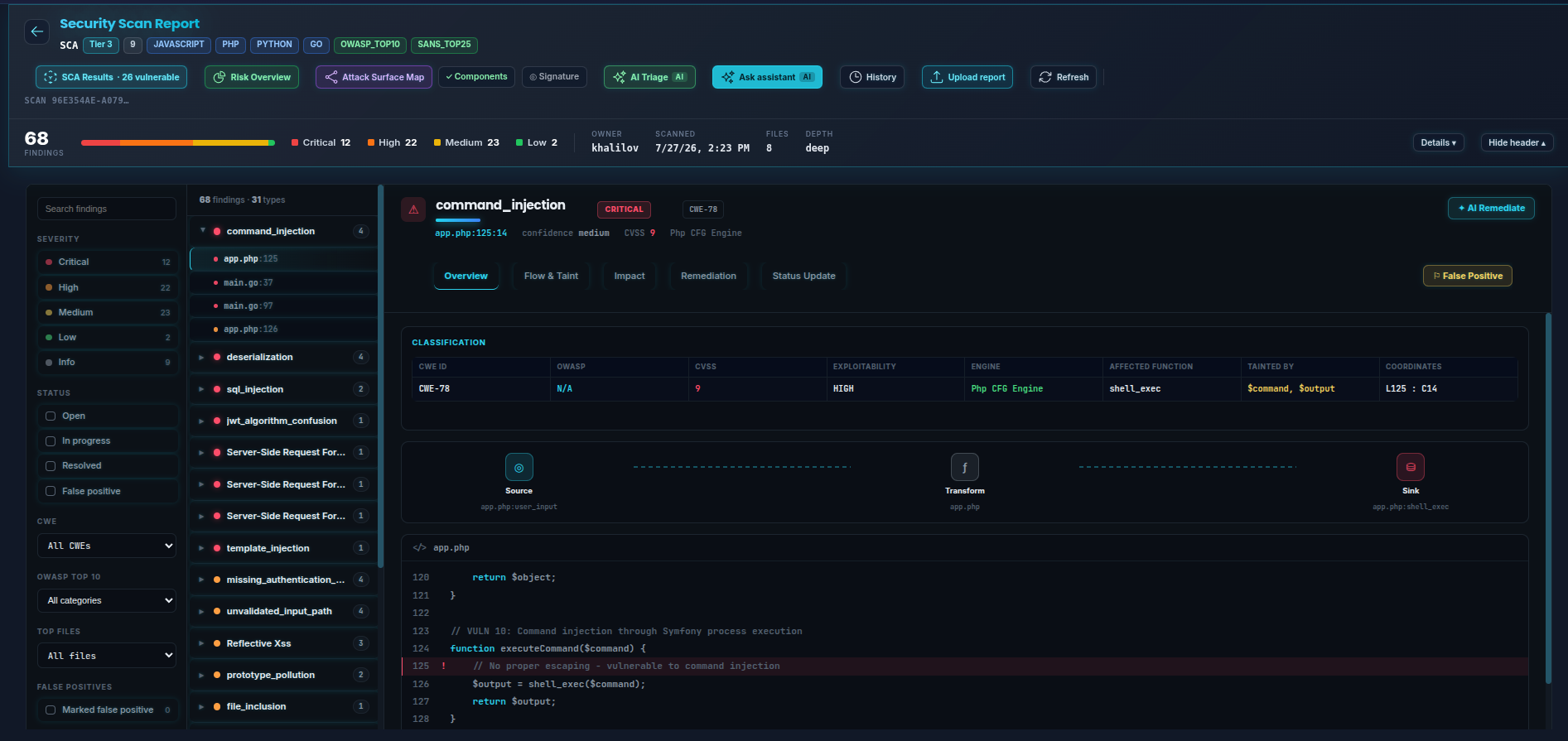
Blue Sentinel brings an offensive security mindset to code review. Upload your application source code and get a prioritized, exploitability-driven security assessment — the way a red team would see it, not the way a linter would.
| Severity | Finding | Location | CWE |
|---|---|---|---|
| CRITICAL | SQL Injection | AuthController.php:42 | CWE-89 |
| HIGH | Server-Side Request Forgery | app.py:29 | CWE-918 |
| HIGH | Prototype Pollution (lodash) | package.json | CWE-1321 |
| MEDIUM | Weak Cryptography | app.py:78 | CWE-327 |
Your team runs vulnerability scans. You get thousands of findings, sorted by CVSS score, with no clear indication of what an attacker would actually exploit first.
Your annual penetration test covers endpoints and infrastructure. Your source code — where the real logic lives — rarely gets the same scrutiny.
Blue Sentinel fills that gap.
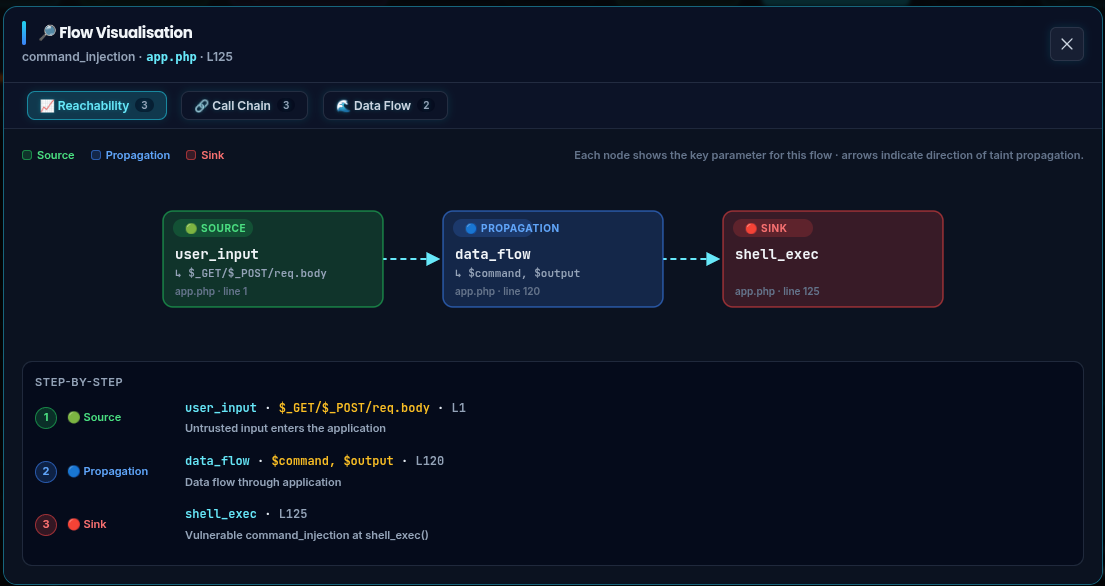
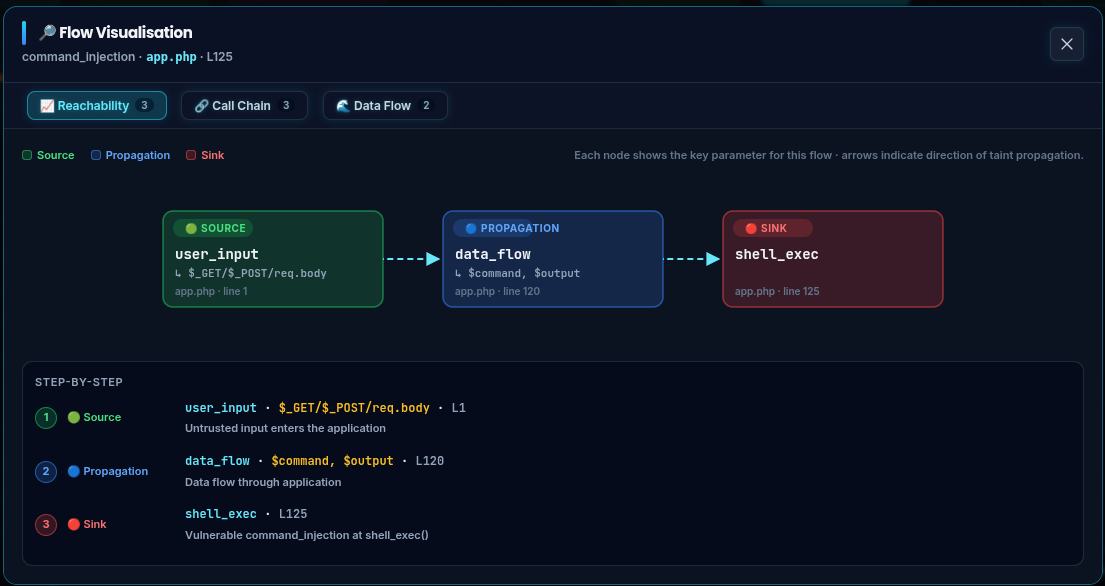
Tracing exactly how attacker-controlled input travels through your application to reach dangerous operations.
Identifies vulnerabilities across your application logic — injection flaws, broken authentication, insecure data handling — mapped to CWE and OWASP Top 10.
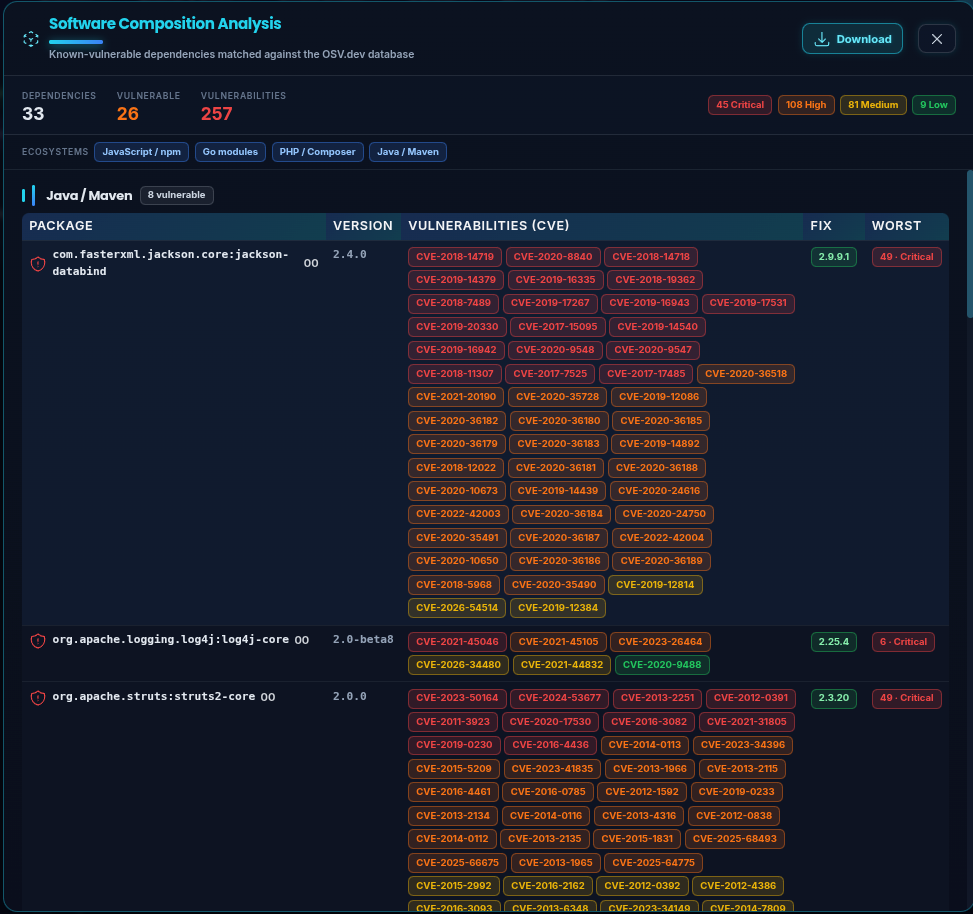
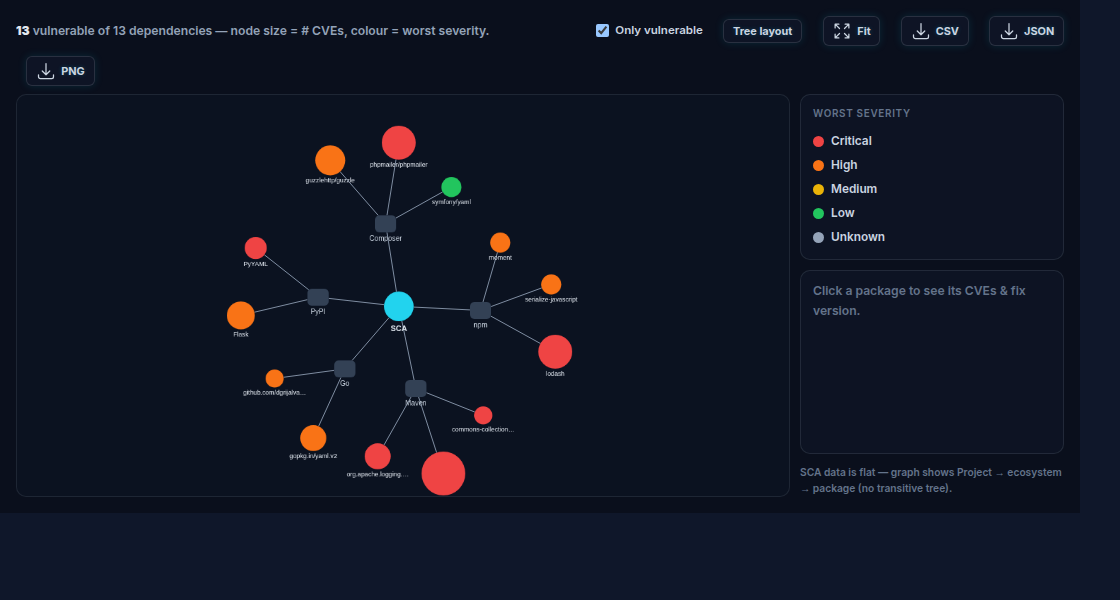
Audits every dependency in your stack. Finds known CVEs in the libraries your application trusts, and identifies the shortest path to fixing them.
Doesn't just flag lines — traces complete attack paths from entry point to impact. Shows exactly what a skilled attacker would target first and why.
Prioritizes fixes by real-world exploitability, not arbitrary severity scores. Tells you what to fix today, what to schedule, and what to architect differently.
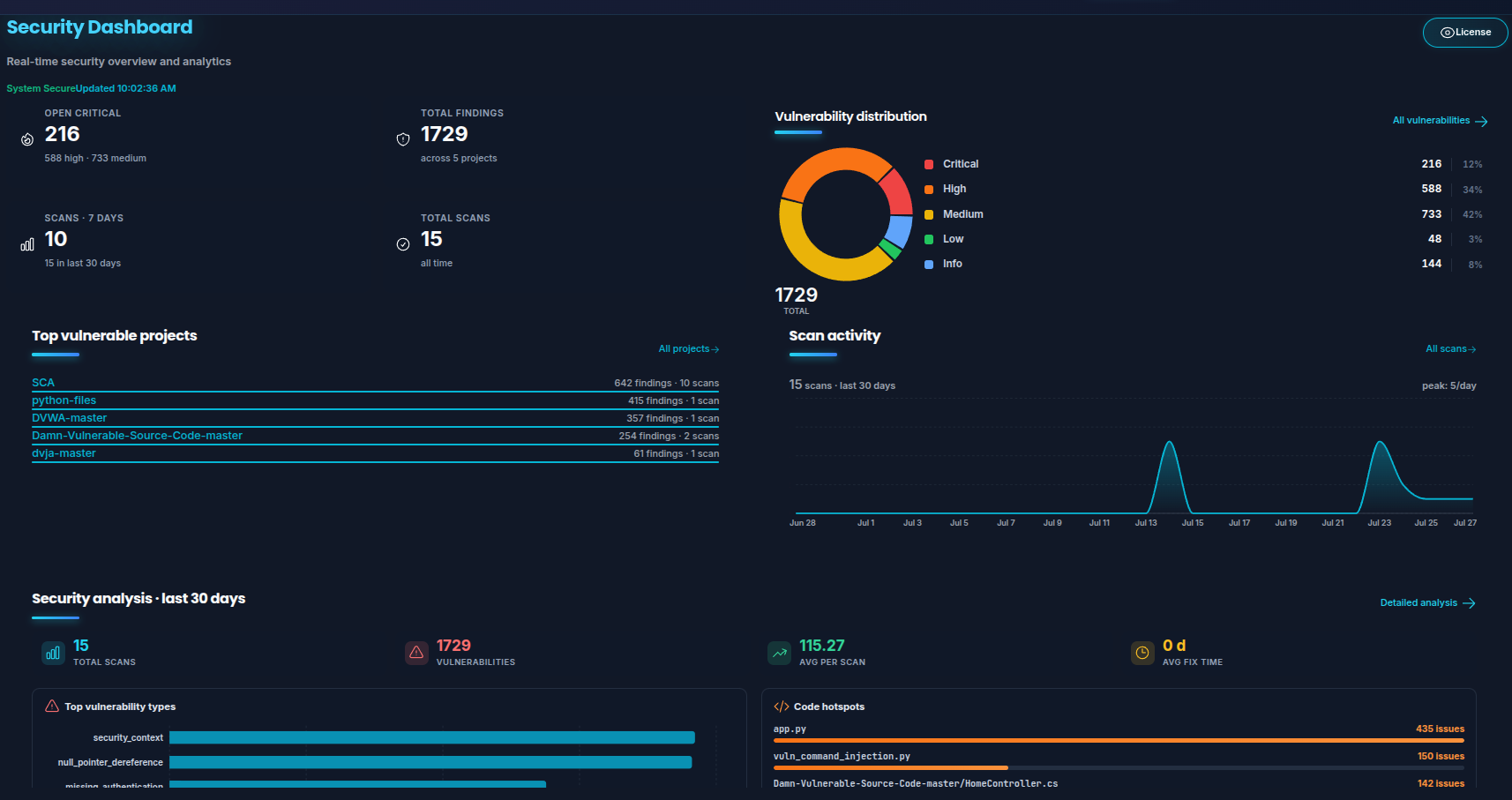
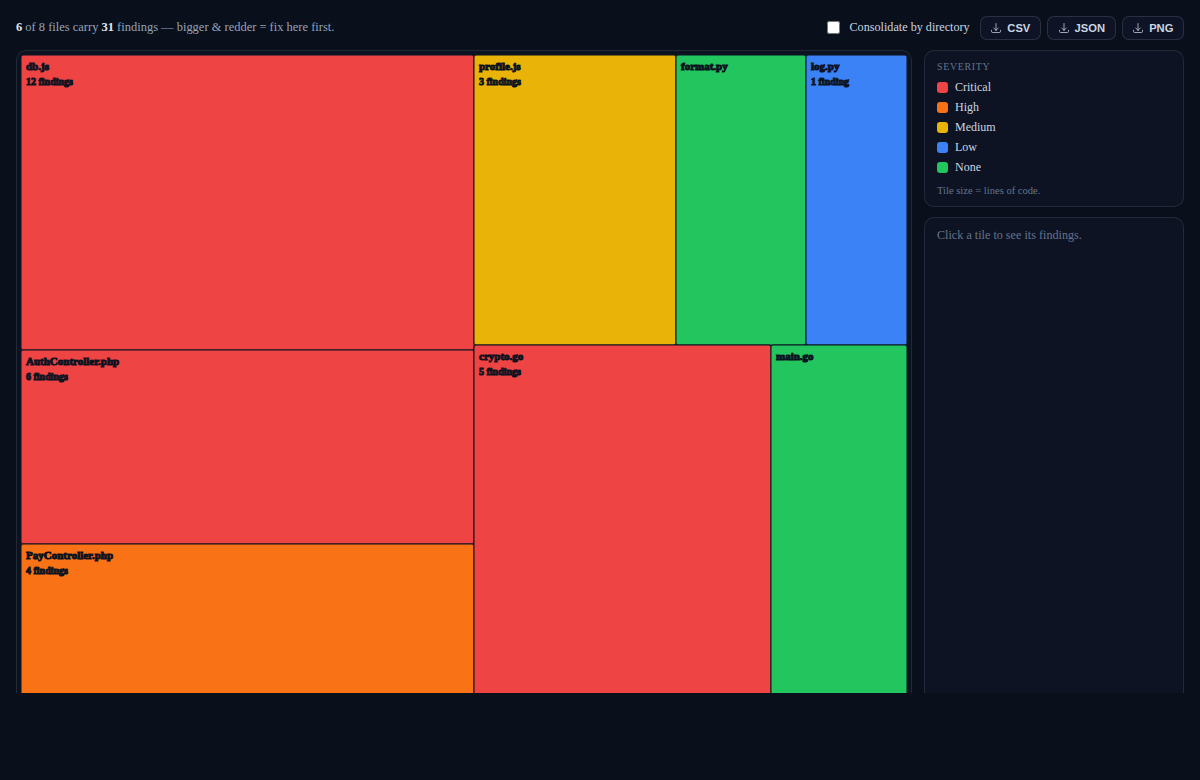
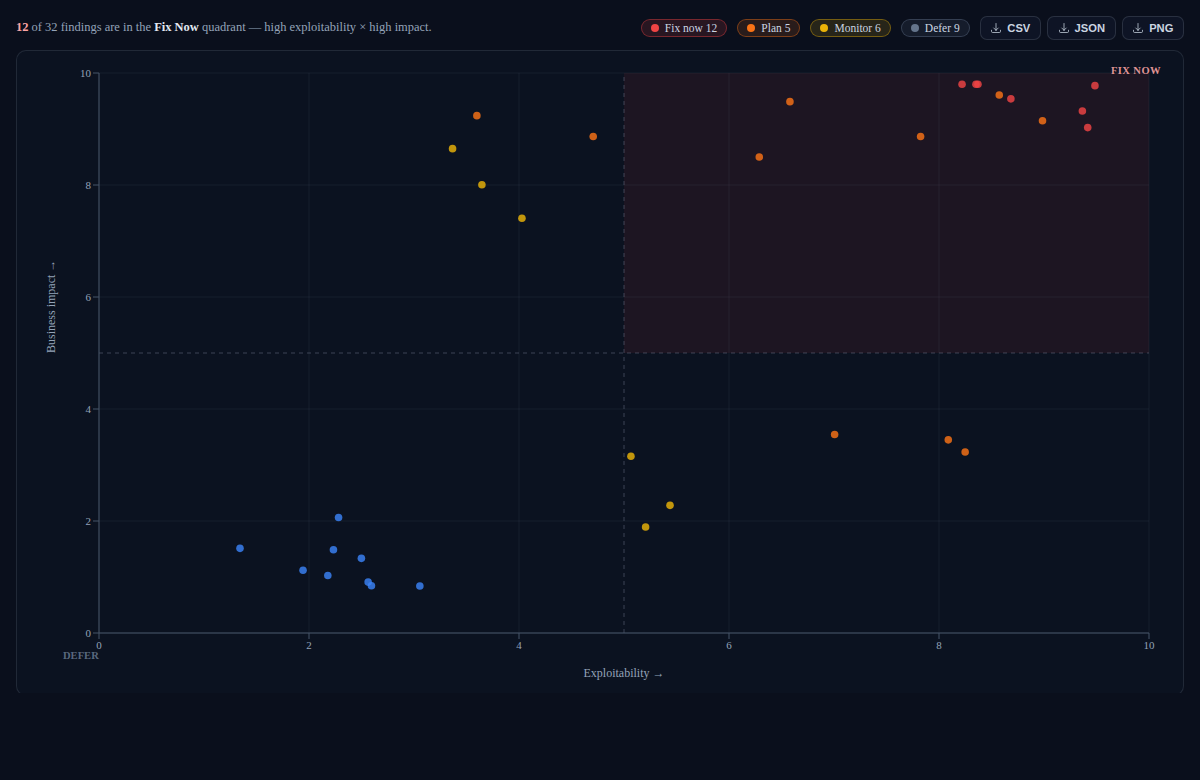
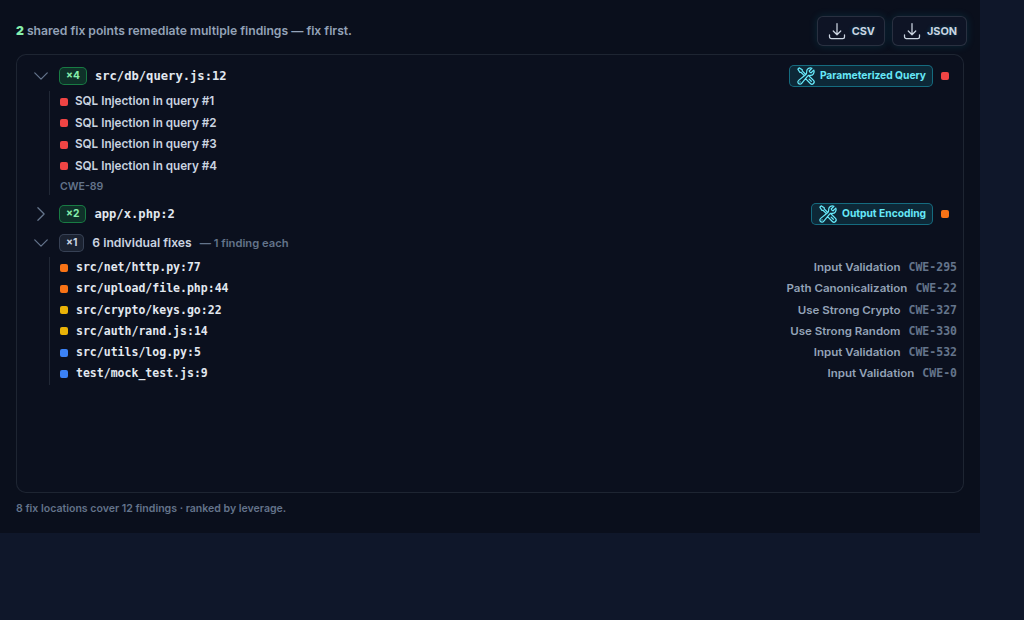
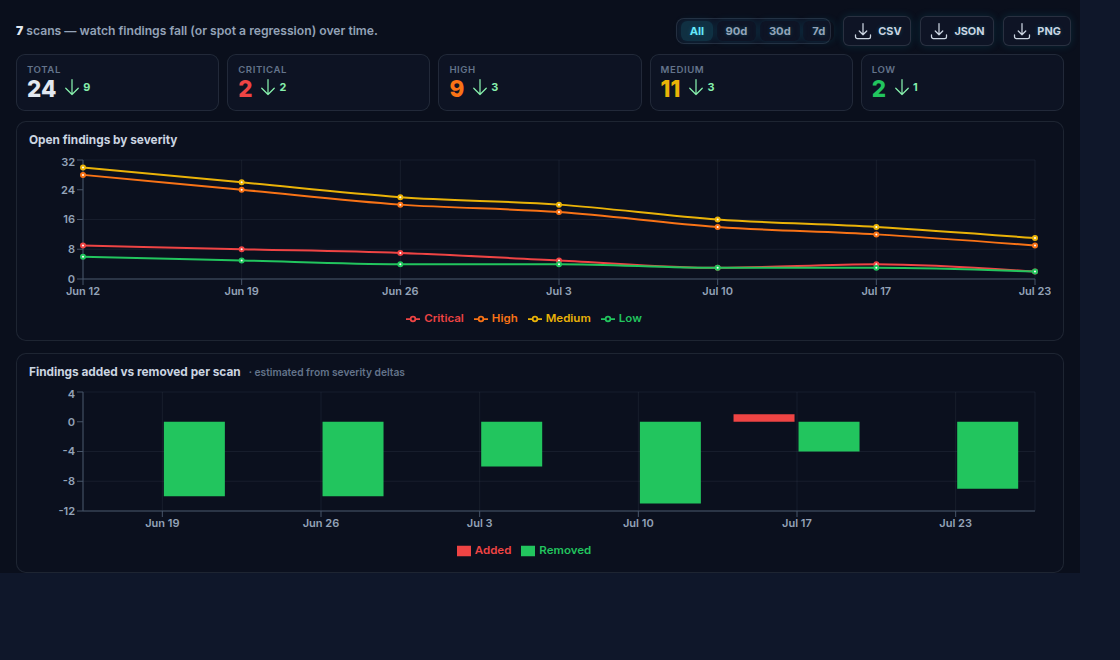
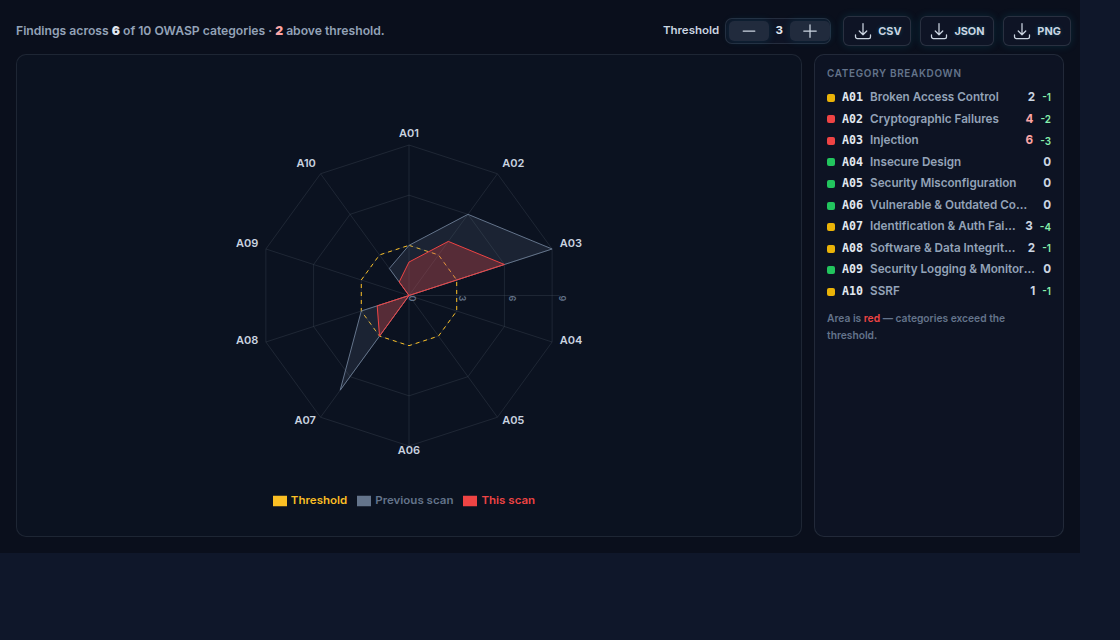
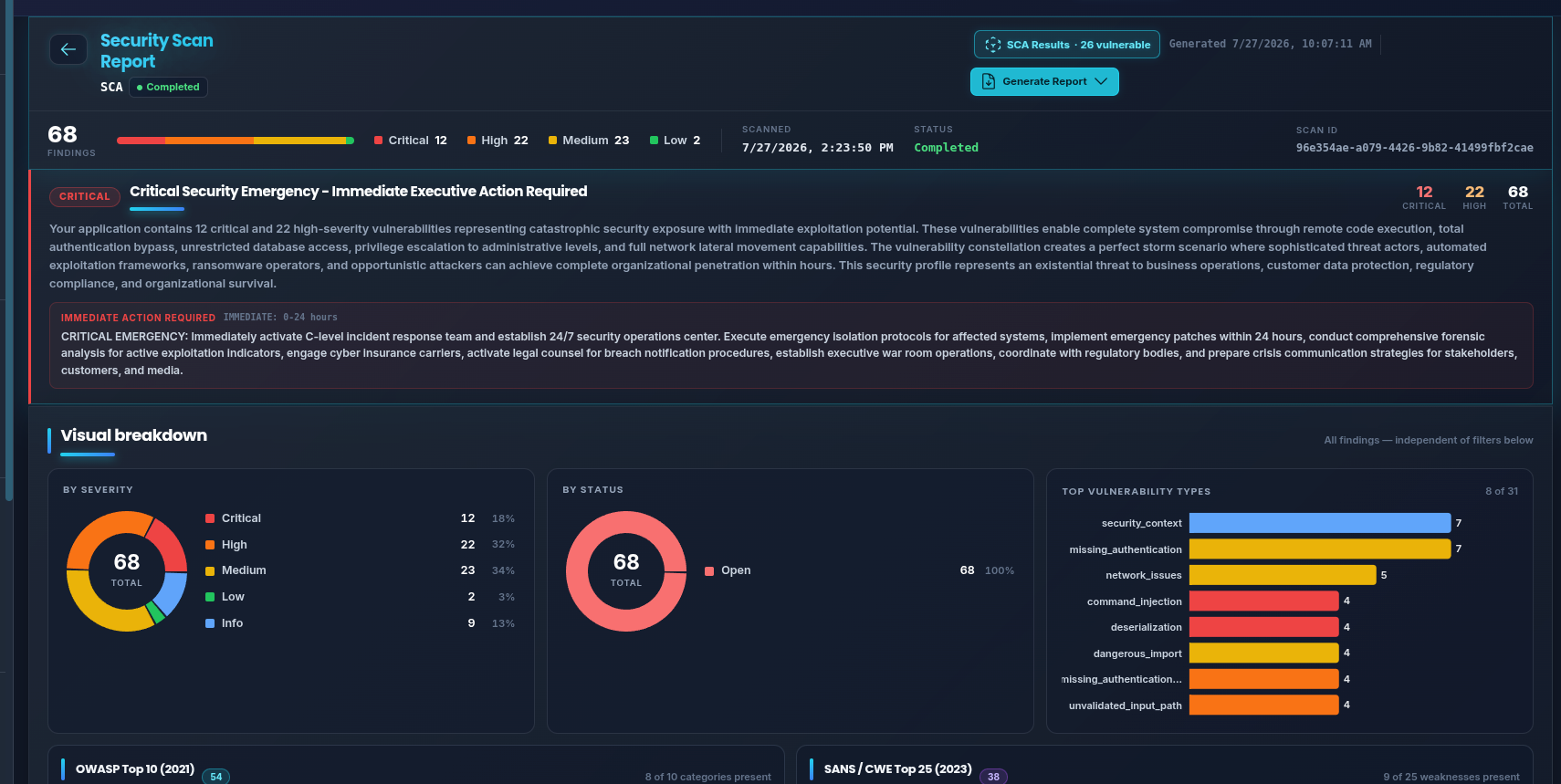
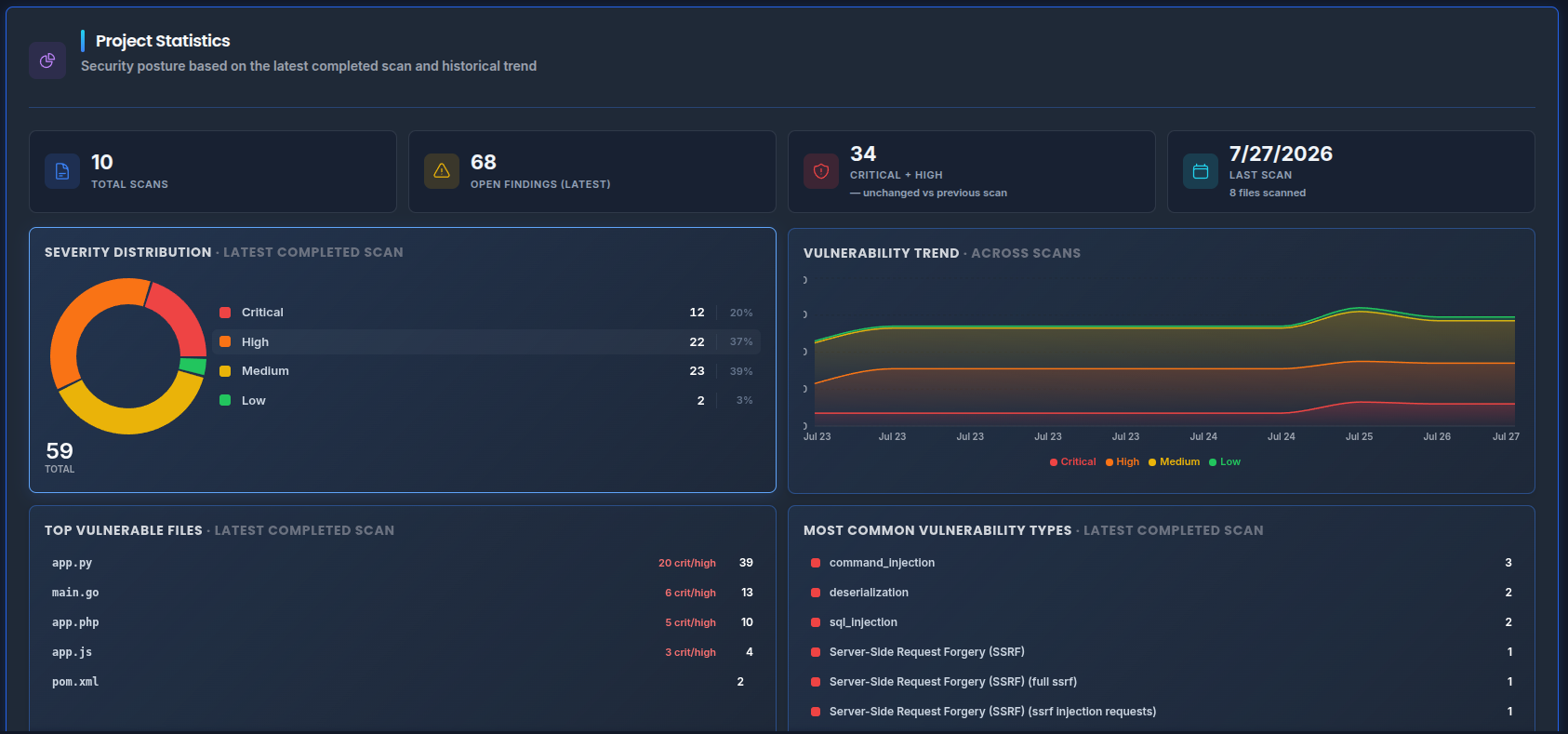
Representative product views. Replace with live captures from your assessment via assets/screenshots/.
A treemap of your codebase where each file is sized by lines of code and colored by its worst finding. One big red tile on a shared utility means a single fix eliminates dozens of findings — obvious in a way a sorted list never is.

A prioritization matrix plots every finding by exploitability against business impact. The top-right quadrant is your fix-now list. Click any quadrant to see exactly which files and vulnerabilities live there.

Blue Sentinel computes the highest-leverage remediation points — the earliest node in a data-flow that, if fixed, eliminates the most downstream findings. It's what a senior security engineer does by hand, done automatically.


Every view exports to CSV, JSON, and PNG — drop it straight into a report.
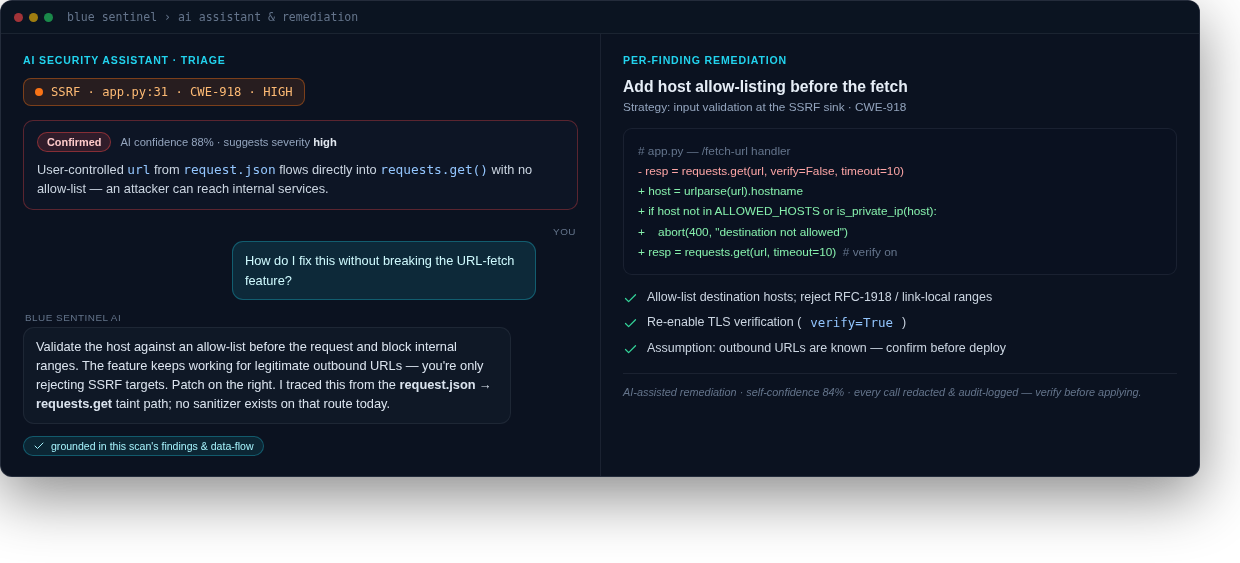
Deterministic engines find the issues. A security-tuned AI layer then helps you cut the noise, understand the risk, and ship the fix — grounded in your actual code and taint paths, never hand-waving.
Ask questions about your assessment in plain English — "which findings touch authentication?", "explain this exploit chain". It answers from your scan's real findings, snippets, and data-flow, with sources.
An adversarial reviewer confirms or refutes each finding — flagging likely false positives (sanitized input, unreachable paths) and confirming the real ones with a rationale and a confidence score. Less noise, more signal.
One click turns a finding into a concrete fix: the attack scenario, a patched code snippet, the remediation strategy, and its assumptions — using the finding's taint source, sink, and call chain as context.
Roll individual fixes up into a prioritized, sequenced remediation plan for the whole assessment — a developer-ready backlog ordered by real-world risk, exportable into your workflow.

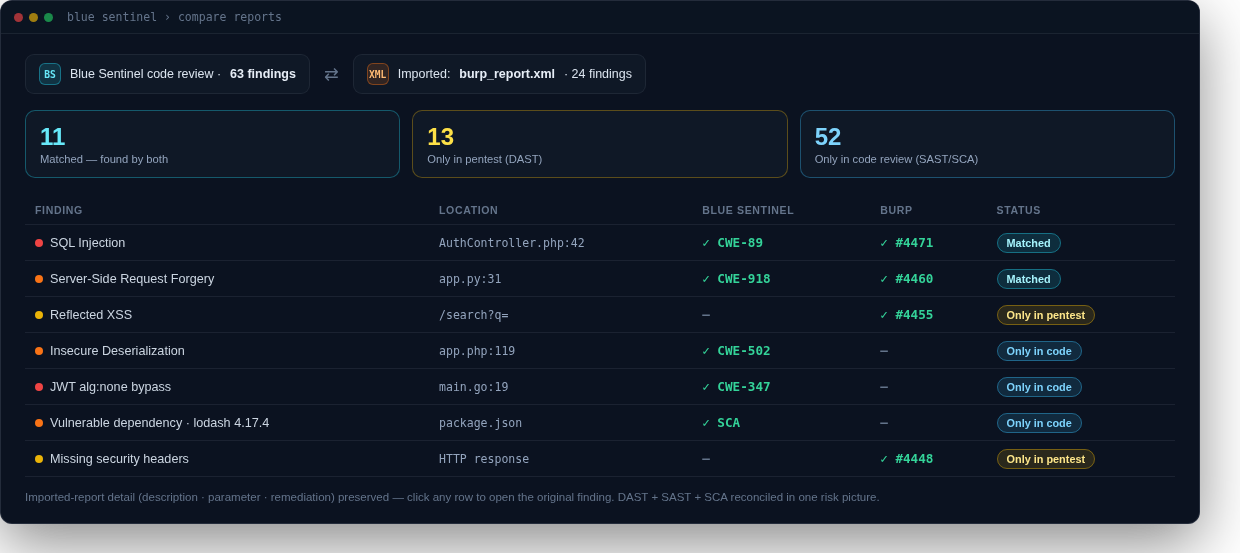
Import the reports you already have — Burp Suite, OWASP ZAP, Snyk, and other web-pentest or scanner outputs (XML/JSON) — and overlay them against Blue Sentinel's code-level findings in one reconciled view.
Your annual pentest and your automated scanners each see part of the picture. Blue Sentinel puts them side-by-side with what's actually in the source, so nothing falls through the gap between tools.

Upload your application source code directly to Blue Sentinel's secure, isolated assessment environment. Supports all major languages. No repository access required. No agents to install.
Blue Sentinel runs a multi-engine analysis — combining static analysis, composition auditing, and taint-path tracing — to build a complete picture of your application's attack surface from the inside out.
Receive a detailed, prioritized report with full exploit-chain visualizations, a remediation backlog sorted by real-world risk, and guidance your team can act on immediately. No noise. No ambiguity.
Conduct a thorough code review of your critical applications without waiting for a consultant's availability or a pentest window. Validate your security posture before external engagements — so your red team finds what matters, not the obvious issues.
Understand the real security exposure in your most important applications. Get a board-ready risk summary alongside a developer-ready remediation backlog — in the same report.
See exactly where vulnerable code is, why it matters, and how to fix it. Not hundreds of rule-match warnings — a focused list of real issues with real remediation guidance.
White-label grade reporting. Run code security assessments for clients on demand. Deliver findings that look and read like a professional engagement output, not a raw tool dump.
Every Blue Sentinel assessment runs in its own dedicated cloud environment — created for your scan, destroyed when it's done. Available directly on the AWS and Azure marketplaces.
This is how government contractors, financial institutions, and security-conscious engineering teams get serious code security assessments without compromising their most sensitive IP.
Blue Sentinel is not designed to run on every commit. It is designed for the moments that matter — before a product launch, before a compliance audit, before an external red team engagement, after a significant feature release.
Think of it as the code-security equivalent of bringing in a specialist: systematic, adversarial, and focused on what actually puts your business at risk.
Start a Blue Sentinel assessment today.
Built by offensive security researchers. Trusted by teams who can't afford to find out the hard way.